Stop Counting Launches: The Metrics That Actually Tell You If Your Digital Experiments Are Working
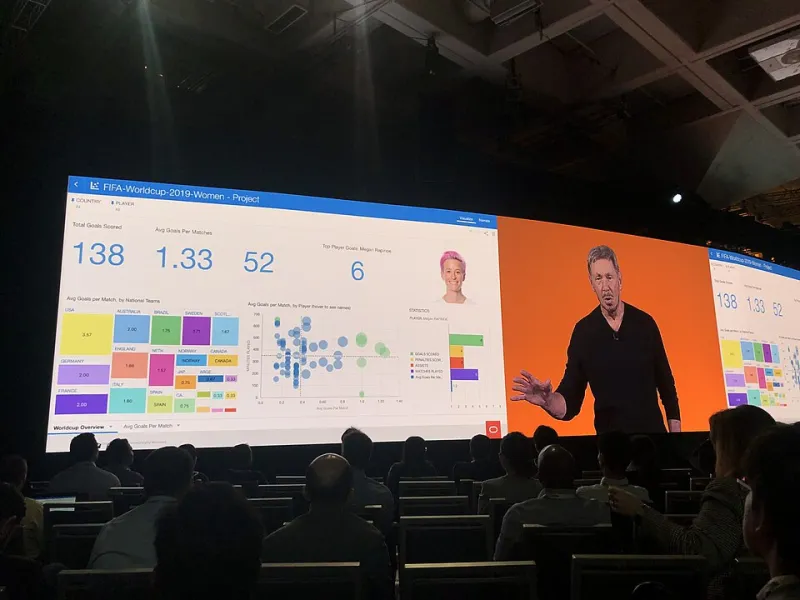
Photo: GeneralAB13, CC BY-SA 4.0, via Wikimedia Commons
Every quarter, somewhere in corporate America, an innovation team presents a slide deck to leadership. The deck shows launches, velocity numbers, maybe a net promoter score from a beta group of forty users. Leadership nods. The team looks busy. And almost none of it tells anyone whether the experimental work is actually producing anything useful.
The metrics problem in digital experimentation is real, widespread, and weirdly undertalked about. Teams default to measuring what's easy to count — outputs — instead of what actually matters, which is learning. The result is a lot of activity that looks productive on a dashboard while the genuinely important questions go unanswered.
Why Standard KPIs Break Down in Experimental Work
Traditional product metrics were designed for products that already exist. Conversion rates, DAUs, retention curves — these are tools for optimizing something you've already built and shipped to a real user base. They're not particularly useful for evaluating work that's explicitly trying to figure out whether something should be built at all.
When you apply optimization-era metrics to exploration-era work, you get a systematic bias toward ideas that look good early. A concept that shows a clean conversion funnel in week two gets resources. A concept that's messier but is surfacing genuinely surprising user behavior gets killed. Over time, this selection pressure produces a portfolio of incremental bets and an absence of anything weird or ambitious.
The deeper problem is that most organizations don't have a shared vocabulary for what a "successful experiment" looks like when the output isn't a product. So teams fill the vacuum with whatever metrics they have, which are the wrong ones.
Redefining What 'Productive Failure' Actually Means
The phrase "fail fast" has been so thoroughly absorbed into tech culture that it's lost most of its meaning. In practice, it often functions as a way to make teams feel better about killing things quickly, rather than a genuine framework for extracting value from work that doesn't pan out.
Productive failure is something more specific. It means an experiment that ends without a shippable product but leaves the team with a materially different understanding of the problem space than they had before. The key word is materially — vague lessons like "users want simplicity" don't count. Productive failure generates specific, falsifiable insights that change what you'd build next.
Consider a team that spent three months building a real-time collaboration feature for a project management tool. The feature never shipped — user testing revealed that the interaction model was fundamentally confusing. By standard metrics, that's a loss. But the research surfaced something unexpected: users didn't actually want real-time collaboration. They wanted better async communication tools. That finding redirected the entire roadmap and led to a feature that became one of the product's most-used capabilities.
The three-month experiment "failed." The team came out of it with something worth more than the feature they'd set out to build.
Building a Learning-First Measurement Framework
So what should teams actually be tracking? A few categories tend to matter more than most standard dashboards capture.
Assumption invalidation rate. Every experiment starts with a set of assumptions — about user behavior, market conditions, technical feasibility. Track how many of those assumptions get meaningfully tested and updated. A high invalidation rate isn't bad news; it means you're running experiments that are actually reaching into unknown territory rather than confirming what you already believe.
Decision influence. Did the experiment change any real decisions? If a three-month research sprint produced a report that nobody referenced when making subsequent product choices, that's a signal worth taking seriously. Learning that doesn't influence decisions isn't productive — it's expensive documentation.
Compounding potential. Some experiments are designed to answer a single question. Others open up new lines of inquiry that weren't visible before. Track which experiments generated follow-on questions and new hypotheses, not just answers. The most valuable experimental work often looks like a tree branching outward rather than a straight line toward a conclusion.
Time-to-insight, not time-to-launch. Launch timelines are useful for execution work. For experimental work, the relevant question is how quickly you can get from hypothesis to meaningful evidence. A team that ships a rough prototype in a week and generates a week of useful user data is moving faster than a team that spends six weeks polishing something before showing it to anyone.
The ROI Pressure Problem
One of the most consistent killers of promising experimental work is premature ROI evaluation. Leadership, understandably, wants to know what they're getting for the investment. Teams, wanting to protect their projects, reach for whatever numbers look good. And the metrics that look good in month two of an experiment are almost never the ones that matter.
This dynamic is especially damaging for work that's genuinely exploratory. Early-stage experiments need a protected period — a window during which they're evaluated on learning quality rather than commercial potential. Organizations that can't create that protection consistently end up with innovation theater: a lot of visible activity that produces very little actual novelty.
The fix isn't to eliminate ROI accountability. It's to separate the evaluation timeline from the exploration timeline. Define upfront what a successful learning outcome looks like for a given experiment, and commit to evaluating against that definition before switching to commercial metrics. This requires discipline and stakeholder alignment that's genuinely hard to maintain — but teams that pull it off tend to produce dramatically more interesting work.
Dead Ends vs. Learning Opportunities: How to Tell the Difference
Not every failed experiment is productive. Some work genuinely is a dead end — it doesn't produce useful insights, it doesn't change any decisions, and it doesn't open new questions. Knowing the difference matters for how you allocate resources going forward.
A few signals that an experiment hit a real dead end rather than a productive one: the findings confirmed assumptions you already had high confidence in, the research didn't surface any unexpected user behavior, and the team can't articulate what they'd do differently if they ran the experiment again. That's not learning — that's validation work wearing experimentation's clothes.
Conversely, productive failure tends to leave teams with a specific, slightly uncomfortable insight they didn't expect. Uncomfortable is a good sign. It means the experiment reached somewhere the team's prior models didn't cover.
What to Take Back to Your Team
If you're running a digital lab or managing experimental work of any kind, the measurement conversation is worth having explicitly and soon. The default metrics will produce default results — more incrementalism, less genuine exploration, and a growing gap between what your dashboards say and what your experimental work is actually worth.
Start by auditing your last six months of experimental projects against a simple question: what did we learn that we didn't already believe? If the answer is thin, the problem probably isn't the quality of your work. It's the framework you're using to evaluate it.