When Your AI Writes the Code You Can't Explain: The Indie Dev Dilemma

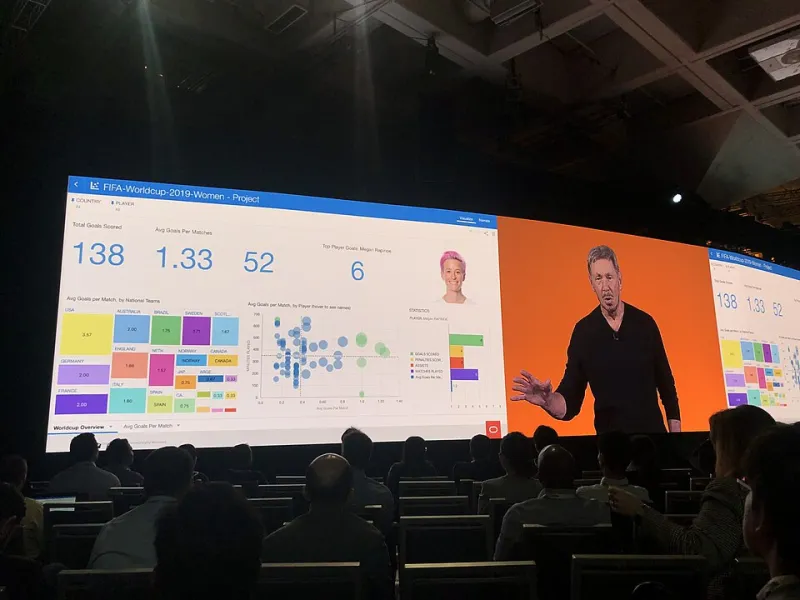
Photo: Grafiknz, CC BY-SA 4.0, via Wikimedia Commons
Let's say you're a solo developer. You've got a SaaS idea, a few hundred dollars a month in cloud budget, and GitHub Copilot humming in the background. In the span of a weekend, you've scaffolded an authentication system, wired up a payment processor, and built a data pipeline that would've taken a five-person team a month to ship in 2021.
You push to production. Users sign up. Money moves. It works.
Then someone asks you to walk them through how the auth flow handles token refresh edge cases, and you realize — you're not totally sure.
This is the indie dev dilemma of 2024, and it's more interesting and more complicated than the usual "AI is replacing programmers" discourse gives it credit for.
The Productivity Gains Are Real — Like, Really Real
Before getting into the thorny stuff, it's worth being honest about what AI pair programming actually delivers, because the productivity gains are genuinely staggering for small teams and solo builders.
Tools like GitHub Copilot, Cursor, and Claude-based coding workflows are letting individual developers operate at a level of output that would've required a small engineering department just a few years ago. Boilerplate gets written in seconds. API integrations that would've taken hours of documentation-reading get scaffolded in minutes. Test coverage that nobody ever had time to write is suddenly... there.
For indie hackers and small studios, this is transformative. The barrier between "I have an idea" and "I have a working product" has dropped dramatically. That's a genuinely good thing for innovation — more experiments get run, more weird ideas get tested, more niche software gets built for audiences that big companies would never serve.
But the speed creates a new kind of problem that's easy to miss when everything is working.
The Codebase You Can't Fully Own
There's a concept in software development called "code ownership" — not in the legal sense, but in the practical sense of truly understanding a piece of code well enough to modify it safely, debug it under pressure, and explain it to someone else. Traditional development enforces ownership pretty naturally, because you can't write something you don't understand.
AI-assisted development breaks that relationship.
When Copilot autocompletes a 40-line function that solves your problem, you can read it, roughly understand what it does, and ship it — without deeply internalizing why it's structured the way it is or what assumptions it's making about your data. Multiply that across hundreds of functions in a growing codebase, and you end up with software that works until it doesn't, and when it doesn't, the debugging process is genuinely harder because the mental model was never fully formed.
This isn't hypothetical. Developers in indie communities on Reddit and Hacker News have been talking about this for a while — the experience of staring at their own codebase and feeling like a stranger in it.
The Security Problem Nobody Wants to Talk About
Here's where things get uncomfortable. AI coding assistants are trained on enormous amounts of code from the open internet — including a lot of code with security vulnerabilities. Studies from Stanford and other research groups have found that Copilot-generated code has a non-trivial rate of security flaws, particularly in areas like input validation, SQL query construction, and cryptographic implementations.
For a developer who deeply understands security, this is manageable — you catch the issues in review. But for a solo developer who's moving fast and maybe doesn't have a deep background in application security, AI-generated code can introduce vulnerabilities that aren't obvious on a quick read.
The accountability question here is genuinely murky. If an AI suggests code that introduces a SQL injection vulnerability and a developer ships it without catching it — whose responsibility is that? Legally, it's the developer's. Practically, the answer is messier, especially as the line between "the developer wrote this" and "the AI wrote this and the developer accepted it" continues to blur.
Craftsmanship vs. Output: A Philosophical Detour
There's a longer conversation happening in dev communities about what programming actually is, and AI pair programming is forcing it into the open.
One school of thought holds that coding is fundamentally a craft — that the process of writing code, wrestling with a problem, and arriving at a solution is where the real value lives. That the understanding you build by doing it the hard way is what makes you a better engineer over time. Under this view, leaning too heavily on AI isn't just a technical risk — it's a developmental one. You're outsourcing the reps.
The other school of thought is more pragmatic: software is a means to an end. If the end is a working product that solves a real problem, and AI gets you there faster, then the romantic notion of craftsmanship is just getting in the way. This is especially compelling for indie developers who aren't trying to become better engineers — they're trying to build a business.
Both views have merit, and the tension between them is probably healthy. But it's worth being clear-eyed about the tradeoffs you're making when you optimize purely for output.
What Responsible AI-Assisted Development Actually Looks Like
None of this means indie developers should stop using AI coding tools — that ship has sailed, and the productivity argument is too strong. But there are some practices that help maintain actual ownership of what you're shipping.
Slow down on security-sensitive code. Auth systems, payment flows, data handling — these are areas where understanding every line matters. Use AI to help, but read everything carefully and consider getting a second set of eyes.
Write your own tests, even when AI offers to. The process of writing a test forces you to think through edge cases in a way that accepting AI-generated tests doesn't. It's one of the better ways to build genuine understanding of code you didn't write from scratch.
Post-mortem your AI usage. When something breaks in production, ask honestly whether the issue came from code you fully understood when you shipped it. That feedback loop is how you calibrate how much to trust your own AI-assisted output.
Document the why, not just the what. AI is great at generating code that does something. It's less good at explaining the architectural decisions behind it. Write those down yourself — it forces clarity and helps you catch places where your understanding is thinner than you thought.
The Long Game
The indie dev community is figuring this out in real time, which is honestly kind of exciting to watch. The developers who are going to thrive in this environment aren't the ones who refuse to use AI tools, and they're not the ones who outsource their thinking entirely. They're the ones who develop a clear-eyed sense of where AI accelerates them and where it creates blind spots — and build habits that account for both.
At Konkreet Labs, we think the most interesting experiments are the ones that push boundaries while staying honest about the risks. AI pair programming is exactly that kind of experiment — genuinely powerful, genuinely complicated, and still very much in progress.